
How to Photograph Lightning

After posting a few photos of lightning which I captured last night, I have been asked a number of times this morning about the camera settings that I used. With more storms forecast for the UK tonight, I thought I'd outline a few key points so that you can have a go at photographing lightning yourself.
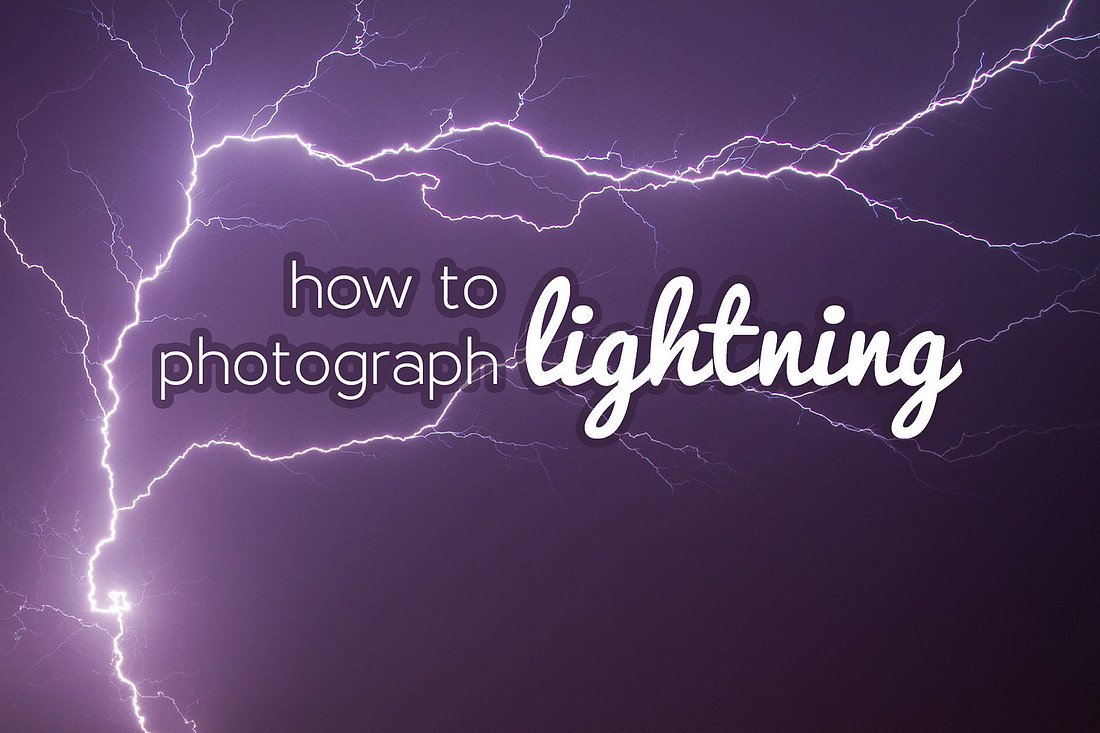

1) Use a wide lens - you never know where lightning will strike so maximise your chances of capturing a strike by including as much sky as possible.
2) Use a low ISO - if you are shooting at night, you might be tempted to push up your ISO but don't! Ideally you want your images to be as sharp as possible so keep your ISO to around 200.
3) Use a slow shutter speed - unless you are super speedy at pressing your shutter release when you see lightning then there is no chance of capturing lightning using a fast shutter speed! Instead, mount your camera on a tripod (or at least make sure it is secure on a stable surface - I've been known to wedge my camera upright in my window using books and bath towels!) and set a slow shutter speed. If shooting at night then 15-20 seconds may be perfectly adequate. Shooting during the day will be a little trickier so use your judgement and experiment. Of course, longer shutter speeds may even allow you to capture multiple strikes in one exposure.
4) Use a small aperture - again, with the landscape looking rather dark, you might be tempted to use a wide aperture to allow more light to enter the lens. As you are using a slow shutter speed however, there really is no need! Of course a wide aperture will also create problems with focussing on the correct point. Use a small aperture - around f11, f16 should be ample - to ensure the majority of the field of view is in focus. As a bonus, small apertures allow you to capture starbursts from any static points of light (e.g. street lights).
5) Use manual focus - unless you set your focus to manual then your camera will try and focus every time you press the shutter! To get around this, simply set your focus to manual and focus at infinity. This will ensure your lightning strikes are as crisp as possible. If you have a point of focus in your foreground, manually adjust the focus so that the foreground is sharp.
6) Keep sheltered - I'm lucky in that I have a great view across the landscape from my window which means I can stay dry (and keep my camera lens raindrop free). Stay indoors or under cover if you can and be sensible - don't head out to high ground and then use an umbrella to shelter under!!!
The key to capturing good lightning shots is to keep an eye on what the storm is doing and adjust your camera as required. If lightning strikes are few and far between, use longer shutter speeds to increase your chances of capturing something. I'd love to see the results so please feel free to share links to your images in the comments below.
Comments
|
January
(1)
February (1)
(4)
March (4)
(6)
April (6)
(5)
May (5)
(4)
June (4)
(2)
July (2)
(7)
August (7)
(3)
September (3)
(6)
October (6)
(5)
November (5)
(3)
December (3)
|
(3)
January (3)
(2)
February (2)
(4)
March (4)
(3)
April (3)
(6)
May (6)
(3)
June (3)
(6)
July (6)
August
September
(1)
October (1)
November
December
|
January
(1)
February (1)
March
(4)
April (4)
May
June
July
August
September
(1)
October (1)
(2)
November (2)
December
|
(7)
January (7)
(6)
February (6)
(1)
March (1)
(2)
April (2)
(2)
May (2)
June
(1)
July (1)
(1)
August (1)
(1)
September (1)
(1)
October (1)
(1)
November (1)
(2)
December (2)
|
January
(1)
February (1)
(2)
March (2)
(2)
April (2)
(1)
May (1)
(2)
June (2)
(4)
July (4)
(3)
August (3)
(2)
September (2)
(9)
October (9)
(4)
November (4)
(1)
December (1)
|
(3)
January (3)
February
(2)
March (2)
(2)
April (2)
(4)
May (4)
(8)
June (8)
(2)
July (2)
(4)
August (4)
(1)
September (1)
(3)
October (3)
(4)
November (4)
(4)
December (4)
|
(1)
January (1)
(2)
February (2)
(1)
March (1)
(1)
April (1)
(3)
May (3)
(2)
June (2)
(3)
July (3)
(1)
August (1)
(1)
September (1)
(3)
October (3)
(2)
November (2)
(3)
December (3)
|
(2)
January (2)
(2)
February (2)
(2)
March (2)
(2)
April (2)
(1)
May (1)
(3)
June (3)
(1)
July (1)
(1)
August (1)
(1)
September (1)
(4)
October (4)
(1)
November (1)
(2)
December (2)
|
(2)
January (2)
(1)
February (1)
(2)
March (2)
(2)
April (2)
May
June
July
August
September
October
November
December
|
January
February
March
April
May
June
July
August
September
October
November
December
|
January
February
March
April
May
June
July
August
September
October
November
December
|
January
February
March
April
May
June
July
August
September
October
November
December
|
January
February
March
April
May
June
July
August
September
October
November
December
|
January
February
March
April
May
June
July
August
September
October
November
December
|
Keep in touch!
If you would like to hear about all of the latest news and upcoming events then pop your email address into the box below to subscribe to my newsletter:


 Chippenham Business Awards finalist 2020Chippenham Business Awards finalist 2020

 Featured by Bride and TonicFeatured by Bride and Tonic